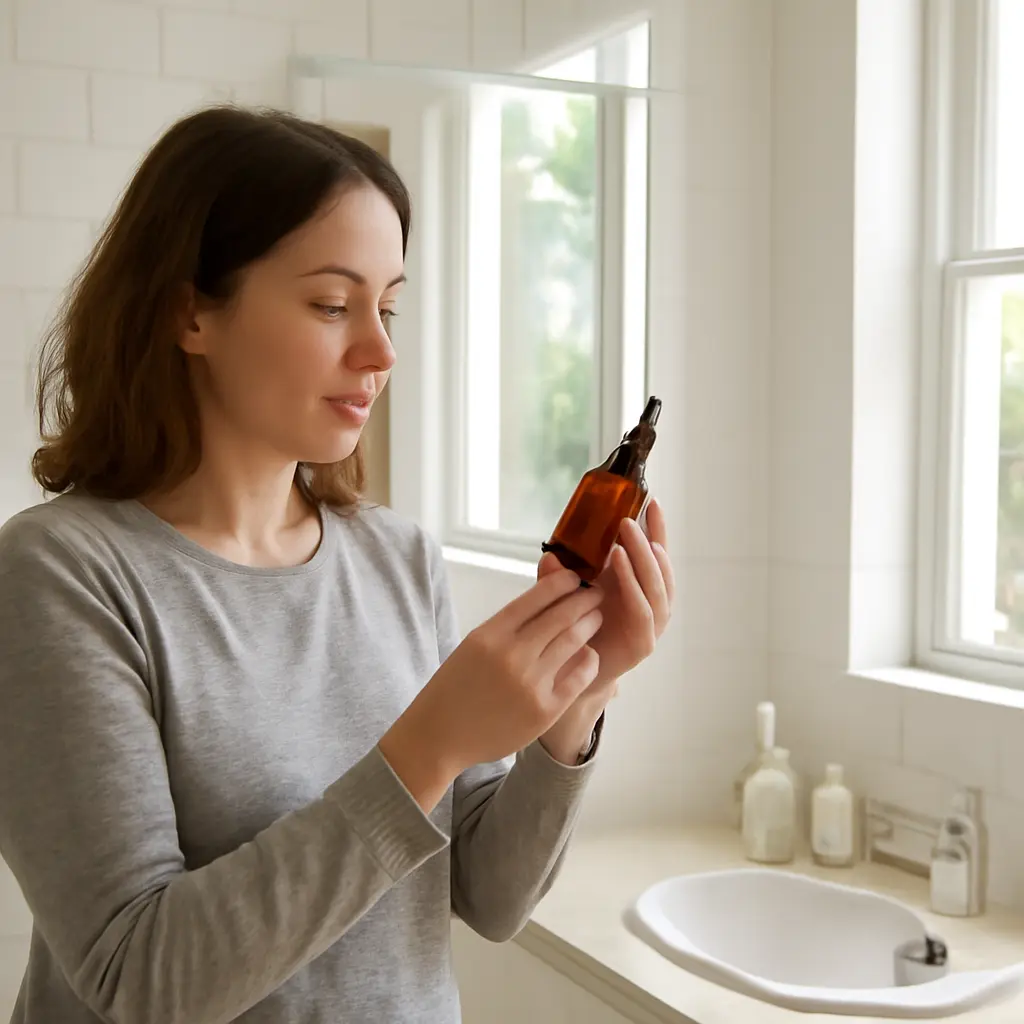
Vitamin C serums and hydroquinone creams both target dark spots, but they do not have equally strong evidence or the same role. Hydroquinone is generally the more effective short-term topical treatment for melasma and other forms of excess pigmentation; vitamin C is a less-studied, usually gentler antioxidant that may modestly brighten skin and help prevent further discoloration. The better choice depends on the cause of the pigmentation, skin sensitivity, product formulation, and medical guidance—especially because facial dark spots can have different diagnoses and hydroquinone use has safety limits.
How vitamin C and hydroquinone compare for pigmentation
Vitamin C and hydroquinone are topical ingredients used to reduce the appearance of uneven pigmentation, but they act differently. Vitamin C—most often L-ascorbic acid in skin-care products—is an antioxidant that can interfere with steps involved in melanin formation and help limit oxidative stress from ultraviolet exposure. Hydroquinone is a depigmenting medicine that inhibits tyrosinase, an enzyme involved in melanin production. This difference helps explain why hydroquinone is usually the stronger spot-fading option, while vitamin C is often used as a supportive or maintenance ingredient.
The American Academy of Dermatology (AAD) lists hydroquinone among treatments dermatologists may use for melasma, while its guidance on dark spots also emphasizes sunscreen and treating the underlying cause. Clinical studies of topical vitamin C show potential benefits, but research is limited by differences in formulation, concentration, and study design. There is no single reliable percentage that predicts how well every product will work.
Vitamin C serum: antioxidant support and gradual brightening
Vitamin C serum is a topical antioxidant product intended to deliver vitamin C to the skin. L-ascorbic acid is the best-known form, but it is unstable in water and can degrade with exposure to light, air, and heat. Products may instead use derivatives such as magnesium ascorbyl phosphate or sodium ascorbyl phosphate; these are not interchangeable with L-ascorbic acid, and evidence varies by ingredient and formulation.
A review in the Journal of Clinical and Aesthetic Dermatology described vitamin C as a potential treatment for photoaging and pigmentation, while noting that skin penetration and stability are important challenges. In practice, vitamin C may help improve the look of mild uneven tone and complement daily sun protection. It is not a dependable substitute for diagnosis or for a dermatologist-directed treatment of persistent melasma.
Hydroquinone cream: a more direct pigment-reducing treatment
Hydroquinone cream is a topical depigmenting treatment that reduces melanin formation in treated skin. Dermatologists may prescribe it for melasma, post-inflammatory hyperpigmentation, and selected dark spots. It is commonly used in limited courses rather than continuously, because prolonged or inappropriate use can cause irritation and, rarely, exogenous ochronosis—a persistent blue-gray discoloration associated with long-term use.
The U.S. Food and Drug Administration (FDA) states that over-the-counter skin-lightening products containing hydroquinone are not approved for sale in the United States. Prescription status and rules differ by country, so people should check local regulations and consult a clinician rather than buying an unregulated lightening product. Hydroquinone can also cause redness, dryness, or contact dermatitis, and it should not be applied broadly or indefinitely without medical advice.
Which works better depends on the type of dark spot
“Dark spots” is a broad description, not a diagnosis. Melasma, sun spots, and marks left after acne or irritation can look similar but respond differently. For that reason, evidence about a treatment for one condition should not automatically be applied to another. A clinician can confirm the cause, check whether a spot needs evaluation, and choose a treatment plan suited to skin tone and sensitivity.
Melasma
Melasma is a chronic condition that causes brown or gray-brown patches, often on the face, and can be influenced by sunlight, visible light, hormones, and genetic susceptibility. Hydroquinone is commonly used as part of clinician-supervised treatment and may be combined with other prescription ingredients. Vitamin C can be an adjunct, but evidence does not establish it as equally effective as hydroquinone for melasma.
Because melasma often returns, treatment typically includes ongoing photoprotection. The AAD recommends broad-spectrum sunscreen with SPF 30 or higher; tinted sunscreen containing iron oxides may also help protect against visible light, which can worsen melasma in some people. Sunscreen is not optional background care: without it, pigmentation can persist or recur despite a lightening product.
Post-inflammatory hyperpigmentation
Post-inflammatory hyperpigmentation (PIH) is discoloration that remains after inflammation or injury, such as acne, eczema, a burn, or an irritating cosmetic treatment. It is particularly noticeable and may last longer in darker skin tones. The first step is to control the cause—such as active acne or dermatitis—because repeated inflammation can create new marks.
Hydroquinone may be considered for persistent PIH under professional guidance, while vitamin C may offer a gentler supporting option for some people. Neither ingredient should be used in a way that causes burning or ongoing irritation: inflammation itself can worsen pigmentation. Dermatology guidance commonly emphasizes gentle skin care, treatment of the original condition, and consistent sunscreen.
Sun spots and changing lesions
Sun spots, also called solar lentigines, are flat areas of increased pigment associated with cumulative ultraviolet exposure. A topical brightener may soften their appearance, but results vary, and procedures may be considered by a dermatologist. A spot that is new, changing, irregular, bleeding, or unlike the person’s other spots should be assessed rather than treated as a cosmetic mark; a lightening cream can delay appropriate evaluation.
Safety, formulation, and realistic expectations
Effectiveness depends not only on the active ingredient but also on correct diagnosis, product quality, regular use, and tolerance. A product that irritates the skin may be counterproductive, while an unstable or poorly formulated serum may not deliver the expected benefit. Improvement usually takes time, and stubborn pigmentation may need a combination plan supervised by a dermatologist.
Irritation and patch testing
Vitamin C—especially acidic L-ascorbic acid—can sting or irritate sensitive skin. Hydroquinone can also cause irritation or allergic contact dermatitis. Introduce one active at a time, follow the product or prescriber’s directions, and stop use and seek advice if there is significant burning, swelling, blistering, or worsening discoloration. A small-area test may help identify irritation, but it cannot guarantee that a product will be safe everywhere.
How long results may take
Pigment does not usually fade overnight. Visible change can take several weeks or longer, and deeper or recurrent pigmentation may take months to manage. There is no universally reliable timeline for either ingredient because outcomes depend on the diagnosis, concentration, formulation, skin response, and sun exposure. If a treatment is not helping or is causing irritation, reassessment is safer than increasing the amount or frequency on your own.
Pregnancy, breastfeeding, and professional advice
People who are pregnant, breastfeeding, have sensitive or inflamed skin, or use prescription acne treatments should ask a clinician before starting a pigment-fading regimen. The AAD advises discussing melasma treatment options with a dermatologist during pregnancy, when some treatments may be unsuitable. Do not use hydroquinone or combine multiple strong actives without checking the product instructions and obtaining appropriate medical advice.
A practical choice: when to consider each ingredient
For a persistent, diagnosed pigmentation problem, hydroquinone is generally the more evidence-supported short-term depigmenting treatment, but it is not a casual or unlimited-use cream. Vitamin C is more often a supportive option for mild uneven tone, antioxidant care, or people who cannot tolerate stronger treatments, though it may still irritate and its results are less predictable.
- Choose medical evaluation first for widespread, persistent, recurring, or changing pigmentation.
- Consider vitamin C as a gradual supportive ingredient if it suits your skin and you use a well-formulated product as directed.
- Use hydroquinone only where legally available and according to a clinician’s or product’s directions; avoid prolonged unsupervised use.
- Use broad-spectrum SPF 30 or higher every day, reapply as directed, and consider tinted iron-oxide sunscreen for melasma-prone skin.
- Avoid picking at acne and address eczema or irritation early to reduce the risk of new post-inflammatory marks.
A simple comparison chart would place hydroquinone higher for direct pigment reduction and vitamin C higher for antioxidant support, while showing sunscreen as essential with either approach. The chart should not imply that one ingredient treats every type of pigmentation or that a stronger product is always safer or better.
Conclusion: hydroquinone is usually stronger, vitamin C is supportive
Hydroquinone generally works better than vitamin C for short-term reduction of diagnosed excess pigmentation because it more directly suppresses melanin production and has an established role in dermatologic treatment. Vitamin C may gradually brighten uneven tone and provide antioxidant support, but the clinical evidence is less consistent and products vary considerably. The most important steps are identifying the type of pigmentation, protecting skin from ultraviolet and visible light, and avoiding irritation or unsupervised long-term hydroquinone use. If dark spots persist, recur, or change, consult a dermatologist before choosing a fading cream.
Sources: American Academy of Dermatology Association, Melasma: Diagnosis and treatment, https://www.aad.org/public/diseases/a-z/melasma-treatment; American Academy of Dermatology Association, How to fade dark spots in darker skin tones, https://www.aad.org/public/everyday-care/skin-care-secrets/routine/fade-dark-spots; U.S. Food and Drug Administration, Skin Products Containing Mercury and/or Hydroquinone, https://www.fda.gov/consumers/consumer-updates/skin-products-containing-mercury-andor-hydroquinone; Pullar, J.M., Carr, A.C., and Vissers, M.C.M., The Roles of Vitamin C in Skin Health, Nutrients, 2017, https://www.ncbi.nlm.nih.gov/pmc/articles/PMC5579659/; Goh, C.L. et al., Skin Hyperpigmentation in Asians: An Update, Dermatology Sinica, 2016, https://doi.org/10.1016/j.dsi.2015.09.001; Draelos, Z.D., Skin lightening preparations and the hydroquinone controversy, Dermatologic Therapy, 2007, https://pubmed.ncbi.nlm.nih.gov/17970888/.