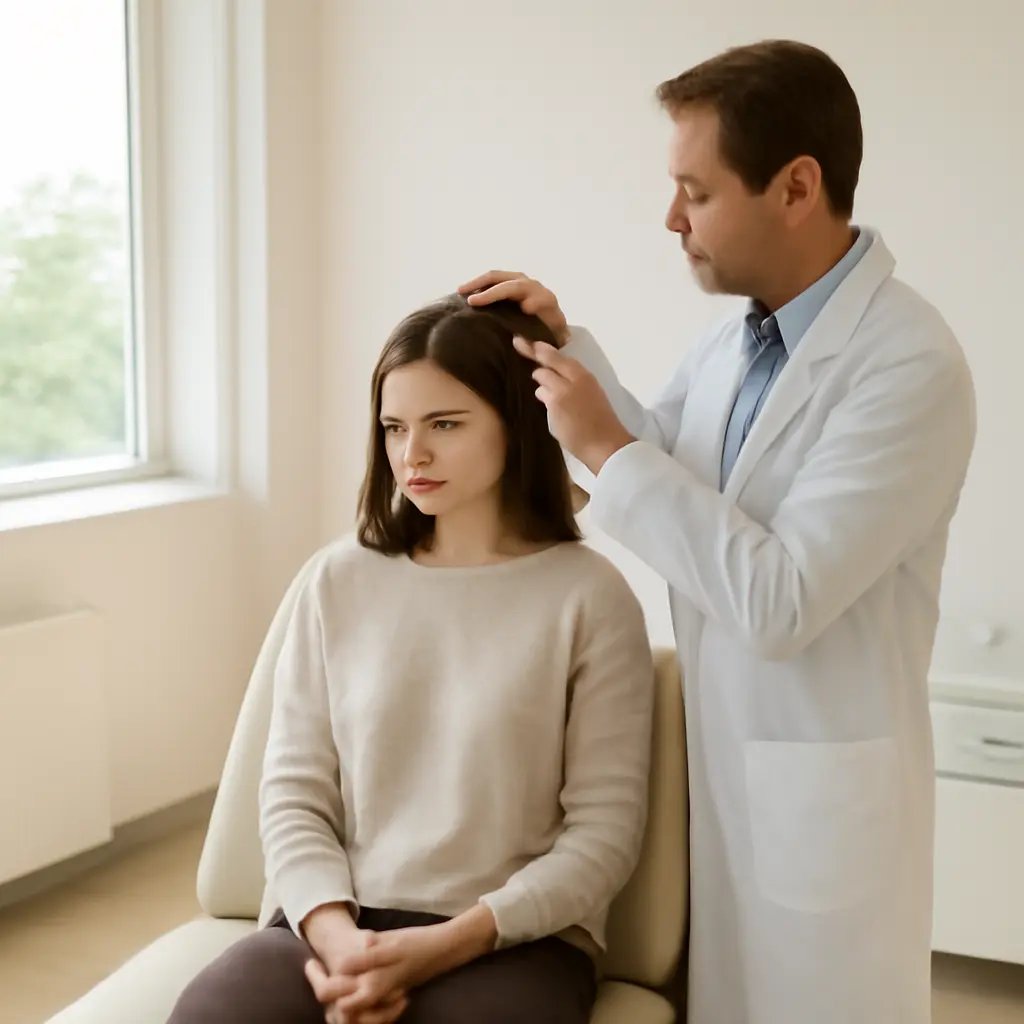
When over-the-counter (OTC) treatments no longer control a teen’s acne, a clinician can check the diagnosis and discuss prescription options, including topical retinoids, combination creams, oral antibiotics, and—in selected cases—hormonal therapy or isotretinoin. The right choice depends on acne type and severity, scarring risk, medical history, and the teen’s preferences; improvement usually takes weeks rather than days. Acne is extremely common: the American Academy of Dermatology (AAD) estimates that it affects up to 50 million people in the United States each year, including adolescents. Persistent acne deserves attention because it can scar and affect emotional well-being, but treatment should be chosen and monitored with a qualified health professional.
Prescription acne options for teens: when to seek care and what to expect
When OTC treatment has not been enough
OTC products commonly contain benzoyl peroxide, salicylic acid, or adapalene. A clinician may consider prescription treatment when acne remains troublesome despite consistent, appropriate use, or sooner when lesions are deep, painful, widespread, or leaving scars. There is no single waiting period that suits every product or teen: acne treatments often need several weeks to show benefit, and irritation or inconsistent use can make them seem ineffective. Bring the products used, how often they were applied, and any side effects to the appointment.
A clinician should also confirm that the bumps are acne rather than another skin condition, review medicines and health history, and ask about the impact on confidence or mood. Seek prompt medical advice for rapidly worsening or very painful lesions, suspected infection, or significant distress. A dermatologist may be helpful for scarring, severe acne, an uncertain diagnosis, or acne that has not responded to a well-followed treatment plan.
Why early, appropriate treatment matters
Acne develops when hair follicles become clogged with oil and dead skin cells, with inflammation and bacteria also contributing. Different forms call for different approaches: blackheads and whiteheads are comedonal acne, while red bumps and pus-filled spots are inflammatory acne; deep nodules or cyst-like lesions can carry a higher risk of scarring. The AAD notes that acne can cause permanent scars and emotional distress, so treatment is not merely cosmetic. A clinician can balance likely benefit against irritation, medication risks, and the burden of a routine.
How clinicians choose prescription treatment for teen acne
The AAD’s acne-care recommendations emphasize matching treatment to acne severity and using effective combinations where appropriate. In practice, clinicians consider lesion type, affected areas, previous treatment and adherence, scarring, health conditions, and the teen’s ability to follow the plan. A prescription is not automatically stronger or better for every case: some teens need a topical medicine, while others benefit from oral treatment or specialist care. Treatment plans are commonly reassessed after a period of regular use so they can be adjusted for results and side effects.
Topical retinoids
Topical retinoids, such as prescription tretinoin or tazarotene, help prevent clogged pores and are used for comedonal acne and as part of plans for mixed acne. Adapalene is available OTC in the United States, although a clinician may recommend a different strength or combination approach. Retinoids can cause dryness, redness, peeling, or stinging, especially at first. Clinicians often advise starting gradually, using a gentle moisturizer, and applying sunscreen. Retinoids should be discussed with a clinician if pregnancy is possible; topical retinoids are generally avoided during pregnancy.
Prescription combination creams and gels
Combination products address more than one acne process. Examples include a retinoid paired with benzoyl peroxide, or benzoyl peroxide combined with a topical antibiotic such as clindamycin. These combinations can be useful for inflammatory acne and may simplify a routine, but they can irritate skin or bleach fabric if benzoyl peroxide transfers to towels or clothing. The AAD recommends that topical antibiotics be used with benzoyl peroxide rather than alone, helping limit antibiotic resistance. Follow the exact directions: more product or more frequent application does not necessarily work faster.
Oral antibiotics for more extensive inflammatory acne
For moderate or more widespread inflammatory acne, a clinician may prescribe an oral antibiotic, commonly a tetracycline-class medicine such as doxycycline, alongside topical treatment. Antibiotics are generally intended for a limited course, not indefinite use, and are paired with non-antibiotic topical care to maintain control and reduce resistance risk. Possible effects vary by drug and may include stomach upset or increased sun sensitivity. Tetracyclines are not appropriate for everyone; the clinician must consider age, pregnancy possibility, other medicines, and individual health factors. Do not use leftover antibiotics or share a prescription.
Hormonal treatment for selected patients
For some patients who menstruate, acne that flares around periods or persists despite topical treatment may respond to a combined oral contraceptive or spironolactone. These medicines are not suitable for everyone and require a review of health history, risks, and treatment goals. Spironolactone is a prescription medicine that can cause side effects and may require clinical monitoring. Hormonal therapy is not an instant spot treatment; a clinician explains what to expect and how progress will be reviewed.
Isotretinoin for severe or treatment-resistant acne
Oral isotretinoin may be considered for severe nodular acne, acne that risks scarring, or acne that has not responded adequately to other treatments. It is a potent medicine with important safety requirements, including close clinician follow-up and strict pregnancy-prevention safeguards for patients who can become pregnant. In the United States, isotretinoin is dispensed through the FDA-required iPLEDGE Risk Evaluation and Mitigation Strategy (REMS). Dry skin and lips are common; other risks and monitoring needs should be discussed directly with the prescriber. It should never be borrowed or obtained without medical supervision.
Making a teen acne prescription plan safer and easier to follow
Set realistic expectations and simplify the routine
Many acne medicines work gradually, and the AAD advises that a treatment may take several weeks to produce noticeable improvement. Use medicines exactly as prescribed, avoid adding several new active products at once, and attend follow-up visits. A simple routine often includes a gentle cleanser, the prescribed treatment, a non-comedogenic moisturizer, and daytime sunscreen. If burning, swelling, severe irritation, or another concerning reaction occurs, contact the prescriber rather than simply layering on more products or abruptly changing the plan.
Discuss adherence, privacy, and emotional effects
A treatment plan only helps if it fits daily life. Teens can tell the clinician if a medicine is too irritating, costly, inconvenient, or difficult to use privately; alternatives may be available. Acne can affect self-esteem and social participation, and distress is a valid reason to seek support. If acne is contributing to persistent sadness, anxiety, bullying, or thoughts of self-harm, tell a trusted adult and contact a healthcare professional promptly; urgent safety concerns require immediate local emergency support.
Conclusion: the next step when OTC acne products stop working
Prescription options for teen acne range from topical retinoids and combination products to time-limited oral antibiotics, selected hormonal treatments, and isotretinoin for severe or resistant disease. A clinician chooses among them based on acne type, severity, scarring risk, health history, and the teen’s needs. Because acne can scar and affect well-being, persistent or painful acne merits professional assessment rather than repeated trial and error with OTC products. Bring a list of treatments already tried, ask about expected timelines and side effects, and schedule follow-up to review progress. This article is general information, not a substitute for medical advice or diagnosis.
Sources: American Academy of Dermatology Association, Acne: Diagnosis and treatment, https://www.aad.org/public/diseases/acne/derm-treat/treat; American Academy of Dermatology Association, Guidelines of care for the management of acne vulgaris, https://www.aad.org/member/clinical-quality/guidelines/acne; American Academy of Dermatology Association, Acne clinical guideline, https://www.aad.org/member/clinical-quality/guidelines/acne; U.S. Food and Drug Administration, iPLEDGE Risk Evaluation and Mitigation Strategy (REMS), https://www.fda.gov/drugs/postmarket-drug-safety-information-patients-and-providers/ipledge-risk-evaluation-and-mitigation-strategy-rems.